


Our Cardiac Imaging Services
Qscan Radiology Clinics provides cardiac and cardiovascular imaging at select clinics across Queensland, New South Wales, the Australian Capital Territory, Western Australia and Tasmania. Your scan is performed by radiographers, sonographers and nuclear medicine technologists experienced in cardiac work, and reported by radiologists with cardiac imaging expertise.
Your report and images are sent electronically to your referring practitioner, so you and your doctor can take the next step with confidence. Flexible appointment times are available, including next-day bookings at many of our clinics.
The difference between each scan type
Your referring doctor chooses your cardiac imaging test based on your symptoms, your medical history and the specific question they need answered. The table below explains what each scan looks at, so you can understand the test you have been referred for. It is not a guide to choosing a scan for yourself - please discuss any questions about which test is right for you with your doctor.
| How it works | Radiation | What it shows best | Appointment duration | Contrast or tracer | Referral requirements | Main preparation | |
| Echocardiogram | Ultrasound | None | Heart chambers, valves and pumping function | 30 to 45 minutes | No | GP or specialist | None for a standard echocardiogram |
| CT Calcium Score | CT (x-rays) | Yes (low dose) | Calcified plaque in the coronary arteries, given as a score | 30 minutes | No | GP or specialist | Avoid caffeine and strenuous exercise on the day of your scan, as a steady heart rate helps produce clear images. Otherwise, no special preparation is usually required. |
| CTCA | CT (x-rays) with contrast | Yes (low dose) | The coronary arteries directly, including narrowing and plaque | About 2 hours | Yes | GP or specialist | Fast 2 hours; no caffeine for 24 hours; no erectile dysfunction medication for 72 hours; no exercise on the day |
| Cardiac MRI | Magnetic fields and radio waves | None | The heart muscle in detail, plus function and volumes | About 2 hours | Usually, via a cannula | Specialist required | Nothing to eat or drink for 2 hours; arrive 30 minutes early; declare all implants |
| MPS | Radioactive tracer and gamma camera | Yes (low dose) | Blood flow to the heart muscle at rest and under stress | 5 to 6 hours, sometimes over 2 days | Yes, radioactive tracer | GP or specialist | Fast 4 hours; no caffeine for 24 hours; some medications must be stopped days ahead |
An echocardiogram is an ultrasound scan of your heart. It shows the size and function of your heart chambers, the movement of the heart muscle walls, how well your valves are working, and your ejection fraction, which is a measure of how strongly the left side of your heart is pumping. It is also called a cardiac echo or a heart ultrasound.
Your doctor may refer you for an echocardiogram if you have shortness of breath, chest pain, palpitations, fluid retention, dizziness, a heart murmur, or a family history of heart conditions. At Qscan, echocardiograms are performed by sonographers and reported by cardiologists.
There is no specific preparation for a standard echocardiogram. Ultrasound does not use ionising radiation, and there are no known risks or side effects.
Read more about echocardiography.
CT Calcium Scoring (CTCS) is a non-invasive CT scan that measures the amount of calcified plaque in the coronary arteries. The calcium score, together with other cardiovascular risk factors, can help assess your future risk of heart attack and other cardiovascular events. It does not directly assess whether an artery is narrowed or blocked.
The scan itself takes approximately five minutes once you are positioned on the CT table. A steady heart rate matters, so you will be asked to avoid caffeine for 24 hours, and avoid exercise on the day of your scan.
A calcium score is only meaningful in the context of your overall health, so please discuss what your result means with the doctor who referred you.
Read more about CT calcium scoring.
A CT coronary angiogram, or CTCA, is a non-invasive scan that uses CT to create detailed images of the coronary arteries supplying blood to your heart muscle. It is used to identify the presence, extent and severity of coronary plaque or atherosclerosis, which may cause chest pain and other symptoms and is the cause of most heart attacks.
A CTCA takes about two hours in total, because the appointment includes a pre-examination assessment, medication to steady your heart rate if it is needed, the scan itself, and post-procedure care. Contrast is injected through a cannula during the scan, and a glyceryl trinitrate spray is given under your tongue immediately beforehand to widen your coronary arteries so they can be assessed accurately.
You will need to fast for two hours, avoid caffeine for 24 hours, avoid any medication used for erectile dysfunction for 72 hours, and avoid exercise on the day. Please keep drinking water so you are well hydrated.
Read more about CT coronary angiography.
A cardiac MRI is a magnetic resonance imaging scan of your heart. It uses a strong magnetic field and radio waves, not radiation, to produce detailed images of the heart muscle, the heart chambers and valves, and the large blood vessels around the heart. It is also called cardiac magnetic resonance, cardiovascular MRI, or CMR.
Unlike most scans, a cardiac MRI images a moving organ. The scanner is timed to your heartbeat using small electrodes on your chest, and you will be asked to hold your breath for short periods so the images stay sharp. That is why the appointment takes longer than most other MRI scans - allow around two hours, with the scan itself taking 60 to 80 minutes.
A cardiac MRI requires a referral from a specialist. Because the magnetic field is always on, it is essential that you tell us about any implant or device before your appointment, including a pacemaker, defibrillator, loop recorder, stent, valve replacement, aneurysm clip, cochlear implant or neurostimulator. Many modern devices are safe to scan depending on the exact make and model, so please bring your implant card or device details.
Read more about cardiac MRI.
A myocardial perfusion scan, or MPS, is a nuclear medicine scan that assesses blood flow to your heart muscle both at rest and under stress. It is used in the assessment of coronary artery disease, and it gives your doctor information about how your heart is functioning that complements the anatomical detail from a cardiac CT or MRI. It is also known as a MIBI scan or a thallium scan.
The scan has three parts and usually takes five to six hours on the same day: a rest scan, a stress test, and a stress scan. The stress test is done on a treadmill where possible, or with a medication that mimics exercise. Occasionally the scan is performed over two days, and we will let you know in advance if that applies to you.
You will need to fast for four hours and avoid caffeine for 24 hours. Some medications must be stopped several days beforehand, so please check with your referring doctor before you stop taking anything. Bring a list of your current medications to your appointment. This scan is not performed during pregnancy.
Read more about myocardial perfusion scans.
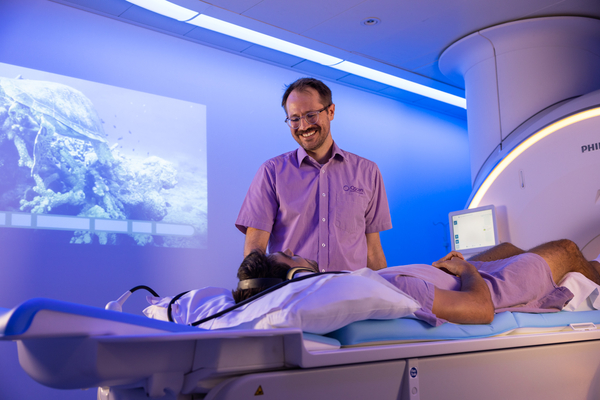
What happens from your referral to your results
- Refer - your GP or specialist gives you a referral for a specific cardiac scan. A cardiac MRI requires a referral from a specialist; the other cardiac scans can be referred by either.
- Book - book online via qscan.com.au/bookings. Tell us at this point if you are claustrophobic, pregnant or breastfeeding, have any implanted device, or have had a previous reaction to contrast, so we can plan your appointment properly.
- Prepare - we will confirm exactly what you need to do before your scan. Preparation differs a great deal between cardiac scans, so please follow the instructions we give you rather than instructions you may have had for a previous scan.
- Scan - your radiographer, sonographer or nuclear medicine technologist will explain the procedure and answer your questions before you begin, and will stay in contact with you throughout the duration of the scan.
- Read and follow up - your images are reviewed and reported, and your report is sent electronically to your referring practitioner. Your doctor will discuss the results with you and what happens next.
Information for referrers
Cardiac imaging is available at Qscan across five modalities at clinics in Queensland, New South Wales, the Australian Capital Territory, Western Australia and Tasmania, reported by subspecialist radiologists.
Referral requirements and appointment planning
| Study | Referral | Appointment Duration | Key referrer notes |
| Echocardiogram | GP or specialist | 30 to 45 min | No patient preparation required |
| CT Calcium Score | GP or specialist | 30 min | No caffeine 24 h, no exercise on the day. No contrast. |
| CTCA | GP or specialist | 2 h | Fast 2 h. Beta blockade may be prescribed on site by a Qscan cardiac radiologist for rate control. GTN administered pre-scan. Iodinated contrast - advise us of prior contrast reaction. |
| Cardiac MRI | Specialist only | 2 h | Fast 2 h, patient to arrive 30 min early. Dedicated cardiac sessions, so availability varies by site. All implants and devices must be declared at referral with make and model where known. |
| Myocardial Perfusion Scan | GP or specialist | 5 to 6 h, or over 2 days | Fast 4 h, no caffeine 24 h. Cease dipyridamole and adenosine 5 days prior, theophylline 3 days prior - please confirm cessation with the patient. Not performed in pregnancy. Small risk of complications from the stress component, including angina and, rarely, myocardial infarction. |
How to refer, and reporting
- e-Referrals
- Upload a patient referral
- Download digital referral forms
- Order referral pads
- New referrer registration
- Images and reports via InteleConnect and InteleViewer
- Diagnostic imaging pathways
Our Doctors
Cardiac images are reported by Qscan radiologists who specialise in cardiac imaging, including radiologists who hold advanced fellowship training in cardiac and chest imaging. Our echocardiography studies are reported by cardiologists.
Referrer Support
Need to speak to someone? Call 1300 177 226 and press 1 for Referrer Support.
Our team can help with results, images, InteleViewer access, referral forms and account setup. You can also receive reports and images by fax, InteleViewer/InteleConnect, or encrypted Medical Objects or HealthLink messaging via Qscan Referrer Results.